
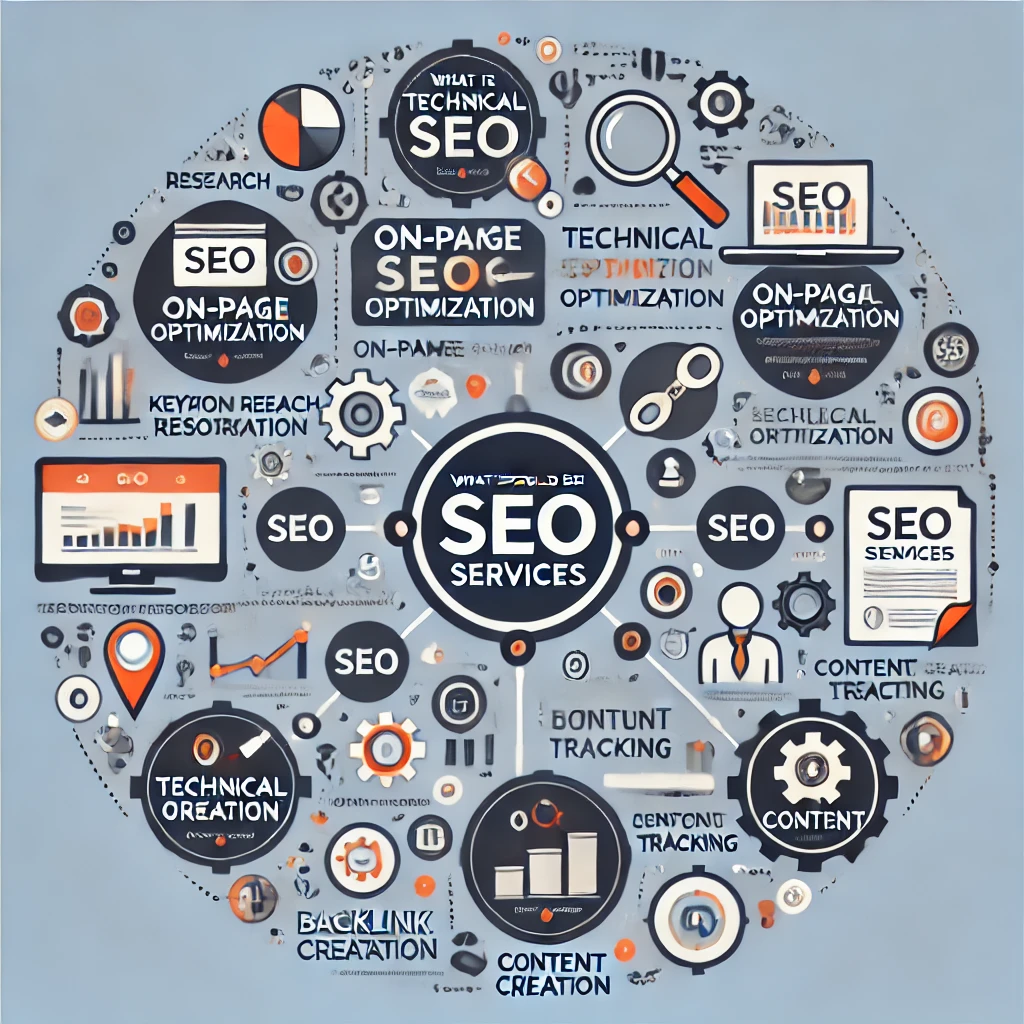
What Should Be Included in SEO Services? Complete 2026 Breakdown
“SEO services” is one of the vaguest phrases in marketing. One agency’s $500/month package is automated reports and directory submissions; another’s $5,000/month retainer is a full growth team. If you’re buying SEO, you need to know what legitimate, complete SEO services actually include — so you can compare proposals apples-to-apples and spot the ones selling you air. This is that breakdown: every core deliverable, what it involves, what fair pricing looks like, and the questions that reveal whether a proposal is real.
The Foundation: SEO Audit and Strategy
Every legitimate engagement starts here. Before anyone builds a link or writes a word, a complete SEO service includes:
- Comprehensive technical audit — crawlability, indexation, site speed, Core Web Vitals, mobile usability, structured data, and security. Findings ranked by impact, not dumped in a 100-page PDF.
- Keyword research and mapping — identifying the terms your buyers actually search, grouped by intent, and assigned to specific pages so nothing cannibalizes anything else. Our guide on how to discover what keywords a website ranks for shows the mechanics.
- Competitive analysis — what rivals rank for, where their links come from, and where the gaps are that you can exploit.
- Documented strategy and roadmap — prioritized actions sequenced over 90, 180, and 365 days, with defined success metrics.
If a proposal skips straight to “10 blog posts and 20 backlinks per month” with no audit or strategy phase, it’s a production line, not a service. Strategy is what makes everything else work. You can see what a proper audit covers in our SEO audit services.
On-Page Optimization
The work done directly on your website — fully within anyone’s control, which is why its absence from a proposal is inexcusable:
- Title tags and meta descriptions — unique, keyword-targeted, written to earn clicks on every important page.
- Heading structure and content optimization — one H1 per page, logical H2/H3 hierarchy, natural keyword integration, and content tuned to match search intent.
- Image optimization — descriptive alt text, compressed files, modern formats.
- URL and site architecture review — clean, logical URL structures and navigation that puts key pages within a few clicks of the homepage.
- Internal linking — strategic links between related pages that distribute authority to money pages and help Google understand site structure.
Technical SEO (Ongoing)
The initial audit finds technical issues; ongoing technical SEO keeps them fixed as your site evolves:
- Core Web Vitals monitoring and improvement — speed isn’t a one-time fix; every site update can regress it.
- Crawl error resolution — fixing new 404s, redirect chains, and broken internal links as they appear.
- Indexation management — ensuring the right pages are indexed and thin or duplicate pages aren’t diluting the site.
- Schema markup implementation and maintenance — structured data for your business type, FAQs, products, articles, and reviews.
- Site change oversight — reviewing redesigns, migrations, and platform updates before they go live, because developers routinely break SEO accidentally.
For background on why each technical element matters, see how SEO works and why it’s critical for your website.
Content Creation and Optimization
Content is the fuel of SEO. A complete service includes both creating new assets and improving what exists:
- New content production — blog posts, guides, service pages, and location pages built around researched keywords and real search intent. Quality bar: genuinely better than what’s currently ranking.
- Content refreshing — updating decaying pages with new data, sections, and visuals. Refreshing existing winners is often the highest-ROI content activity there is.
- Content consolidation — merging cannibalizing or thin pages into definitive resources with proper redirects.
- Content briefs and editorial standards — even if you write in-house, the SEO team should direct what gets written and why.
Beware proposals where “content” means AI-generated filler published at volume. Google’s helpful-content systems specifically target exactly that. One excellent article beats ten thin ones.
Link Building and Digital PR
External authority — the links, mentions, and citations that tell Google your site is trusted:
- Manual outreach campaigns to relevant publications for earned placements.
- Digital PR — data studies, expert commentary, and newsworthy stories that earn coverage.
- Unlinked mention conversion and broken link building.
- Local citations and directory cleanup for local businesses.
What should never be in this section: purchased links, private blog networks, automated directory blasts, or any tactic the provider can’t explain plainly. Our article on SEO promotion services breaks down legitimate promotion in detail.
Local SEO (for Location-Based Businesses)
If customers find you by location, complete SEO services must include:
- Google Business Profile optimization and management — categories, services, photos, posts, Q&A, and review strategy. Our complete guide to setting up Google Business Profile covers the setup; ongoing management keeps it working.
- Local keyword targeting and location pages — unique, useful pages for each service area.
- NAP consistency and citation management — your name, address, and phone number identical everywhere.
- Review generation and response — systematic, not occasional.
Businesses that serve specific industries get more from specialists — for example, our dental SEO service and landscape SEO service pages detail what’s included for those verticals.
Reporting and Communication
The deliverable buyers undervalue most — until they don’t get it:
- Monthly reports in plain English — what was done, what changed, what it means, what’s next. Not just charts.
- Business-metric tracking — rankings and traffic tied to leads, calls, and revenue wherever measurable.
- A named contact and regular check-ins — you should know who’s working on your account and be able to reach them.
- Full access to everything — your Analytics, Search Console, and all accounts in your name. Always.
What Fair Pricing Looks Like in 2026
With the deliverables above as your yardstick, pricing starts making sense:
- Under ~$750/month: Almost certainly automated tools, minimal human work, or offshore volume production. Occasionally fine for a tiny site needing basics; usually a disappointment.
- $1,000–$2,500/month: The legitimate small-business range in US/UK markets — covers audit, strategy, on-page work, content, and modest link acquisition for low-to-medium competition.
- $2,500–$7,500/month: Competitive markets, larger sites, serious content velocity, active digital PR. Where most mid-sized businesses land.
- $7,500+/month: Enterprise scope — large sites, multiple markets, dedicated teams. See our enterprise SEO services for what that tier involves.
- Project-based: Audits from several hundred to a few thousand dollars; one-time technical fixes and migrations quoted by scope.
Ecommerce has its own cost structure given product-page volume and technical complexity — our ecommerce SEO services page details that scope. The key principle: price should track with labor. Real SEO is skilled human work, and proposals priced below the cost of that work are telling you exactly what you’ll get.
Red Flags in SEO Proposals
- Guaranteed rankings or timelines (“page one in 60 days”).
- No audit or strategy phase — straight to deliverable quotas.
- Link counts without quality descriptions (“50 backlinks/month”).
- No reporting, or reports with no narrative.
- Long lock-in contracts with no performance provisions.
- They set up your Analytics/Search Console under their accounts.
Our flagship guide on what makes the best SEO company stand out expands every one of these into full evaluation criteria.
Frequently Asked Questions
What’s the minimum a small business should expect from SEO services?
At minimum: an initial audit, keyword research, on-page optimization of core pages, Google Business Profile setup (for local businesses), a content plan, foundational link building, and monthly reporting. Anything less is maintenance, not growth.
Should SEO services include content writing?
Yes — content is inseparable from SEO in 2026. Either the agency writes it, or they provide detailed briefs and optimization for your in-house writers. A proposal with no content component has no growth engine.
How do I compare two SEO proposals?
Line up the deliverables above and check each proposal against them: audit, strategy, on-page, technical, content, links, local, reporting. Then compare who’s doing the work, how success is measured, and contract terms. The cheaper proposal usually just includes less — or hides what it includes.
Are cheap SEO services ever worth it?
Rarely for growth. Budget services can handle narrow, well-defined tasks (a one-time audit, GBP setup), but ongoing “SEO” under ~$750/month in competitive markets typically means automation and low-quality links that risk more than they gain. Our article on the benefits of hiring an affordable SEO company explores where budget options genuinely fit.
Should I pay monthly or per project?
Monthly retainers suit ongoing growth (content, links, monitoring). Projects suit defined scopes (audits, migrations, penalty recovery). Most businesses need both at different times — an initial project, then ongoing retainer.
What results should I expect and when?
Technical fixes: weeks. Content and rankings: 3–6 months for meaningful movement. Substantial ROI: typically 6–12 months. Proposals promising faster should explain exactly why your situation is exceptional — sometimes it is, usually it isn’t.
Get a Proposal You Can Actually Evaluate
Now you know what complete SEO services include — so hold us to it. We’ll send you a proposal mapped to these exact deliverables, with clear scope, clear pricing, and a free audit showing where you stand today. Start with our SEO audit services or call +1 716 306-1471 for a free, no-pressure proposal.
Want Results Like These for Your Business?
Get a free SEO audit — we’ll show you exactly what’s holding your site back and what it would take to outrank your competitors.