
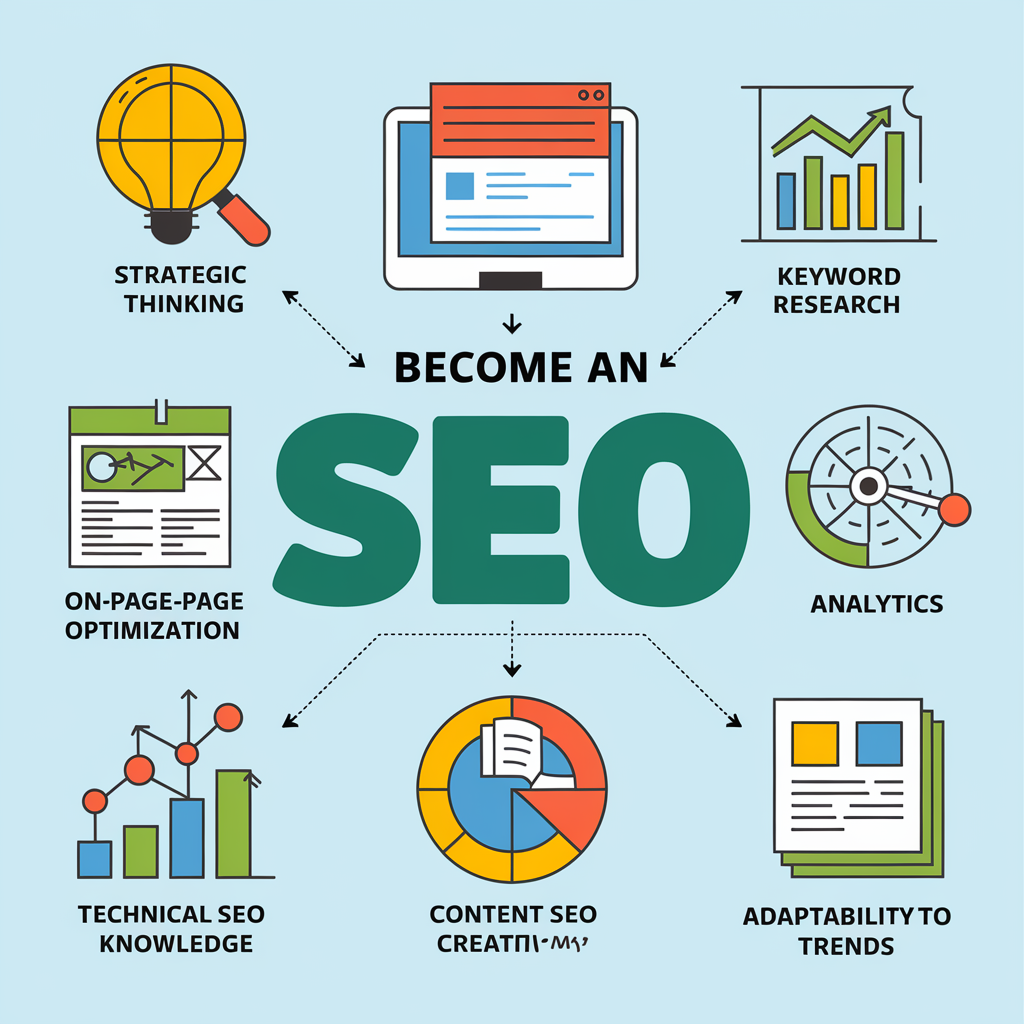
SEO Expert Skills: What the Best SEOs Actually Know (2026)
Everyone calls themselves an SEO expert. The title is unregulated, the barrier to claiming it is zero, and the gap between someone who took a weekend course and someone who can actually grow a business through search is enormous. So what separates the real experts from the pretenders?
This guide breaks down the actual skill stack the best SEOs possess in 2026 — and the honest shortcut most businesses eventually take.
1. Technical SEO Mastery
This is the foundation everything else stands on, and the area where pretenders are exposed fastest. A genuine expert understands:
- How search engines actually work — crawling, rendering, indexing, and ranking as mechanical processes, not metaphors. They know what happens between Googlebot requesting a URL and a page appearing in results.
- HTML, CSS, and JavaScript fundamentals — enough to diagnose why content isn’t rendering, why a page is slow, or why structured data is broken. They don’t need to be developers, but they must debug like one.
- Site architecture and crawl optimization — designing information hierarchies, managing crawl budget on large sites, handling pagination, faceted navigation, and international structures with hreflang.
- Core Web Vitals and performance — not just knowing the metrics, but knowing which fixes actually move them and which are cosmetic.
- Structured data — implementing schema correctly across content types, and understanding how it influences rich results and AI-generated answers.
- Log file analysis and advanced diagnostics — reading server logs to see how Googlebot actually behaves on a site, rather than guessing from surface-level tools.
If someone can’t explain how they’d diagnose a sudden traffic drop, they don’t have this skill — regardless of their title.
2. Search Intent and Content Strategy
The best SEOs are part psychologist. Rankings go to pages that satisfy searchers, and understanding what a searcher actually wants is a skill that separates experts from keyword-stuffers.
- Intent classification — distinguishing informational, commercial, transactional, and navigational intent, and mapping each to the right page type and format.
- SERP analysis — reading a results page like a briefing document: what formats rank, what angles win, what gaps exist, and what Google believes the intent to be.
- Topical authority building — planning content clusters that establish a site as the definitive resource in its space, not a scatter of disconnected posts.
- Content briefing and editing — translating research into briefs writers can execute, then editing drafts so they rank and read well. Optimization that kills readability kills conversions too.
- E-E-A-T awareness — understanding how Google evaluates experience, expertise, authoritativeness, and trust, and building those signals genuinely (author credentials, citations, original research) rather than faking them.
3. Data Analysis and Measurement
Modern SEO is a data discipline. The best practitioners are comfortable with:
- Google Search Console and Analytics at depth — not dashboard-glancing, but segmenting queries, diagnosing cannibalization, tracing conversion paths, and spotting patterns in noisy data.
- Statistical reasoning — knowing the difference between correlation and causation, understanding seasonality versus real growth, and not declaring victory (or defeat) on a week’s data.
- Forecasting and business-case building — translating “we could rank for these terms” into “this is the traffic and revenue opportunity, and here’s the investment required.” Experts speak the language of ROI, not just rankings.
- Tool fluency — professional-grade familiarity with the best SEO tools available — crawlers, rank trackers, link databases — and the judgment to know when the tool is wrong.
An SEO who can’t connect their work to revenue is a cost centre.
4. AI Search and the New Visibility Layer (2026)
This is the skill set that didn’t exist five years ago and now separates current experts from outdated ones:
- AI Overview and answer-engine optimization — understanding how Google’s AI Overviews, ChatGPT, Perplexity, and other answer engines select and cite sources, and structuring content to be quotable: clear factual statements, defined entities, original data, and strong topical authority.
- Entity SEO — optimizing for the things (businesses, people, concepts) search engines understand, not just keyword strings. Consistent entity signals across the web — same name, same facts, same relationships — build the trust AI systems rely on.
- AI-assisted workflows — using AI for keyword clustering, content briefs, and technical auditing — while keeping human judgment over strategy and quality. Experts use AI as leverage, not autopilot.
- Adaptability as a core competency — the search landscape now shifts quarterly, not yearly. The defining expert trait in 2026 isn’t knowing today’s tactics — it’s the demonstrated ability to learn new ones.
For a deeper comparison of approaches, see our analysis of AI vs traditional SEO for keyword research.
5. Link Building and Digital PR
Earning authoritative backlinks remains one of the hardest and most valuable SEO skills:
- Digital PR — creating newsworthy assets (original research, data studies, expert commentary, tools) and earning coverage from real publications.
- Outreach at scale with quality — personalized, value-driven outreach rather than template spam. Response rates are the metric that matters.
- Link profile auditing — distinguishing healthy profiles from toxic ones, and knowing when (and how) to disavow.
- Relationship building — the best link builders maintain genuine journalist and publisher relationships over years. It’s a network asset, not a tactic.
Anyone whose link building strategy is “we have a network of sites” is describing a link scheme, not expertise.
6. Conversion Thinking and Business Acumen
Traffic without revenue is a hobby. The best SEOs think beyond rankings:
- CRO fundamentals — understanding how page speed, trust signals, calls to action, and UX affect whether organic visitors become customers.
- Funnel awareness — optimizing differently for awareness content versus bottom-funnel pages, and knowing which deserves the investment.
- Competitive strategy — analysing not just what competitors rank for, but why they win and where they’re vulnerable.
- Prioritisation under constraints — every business has limited budget. Experts rank opportunities by expected revenue impact per unit of effort and say no to low-ROI work.
This is also what distinguishes enterprise-level SEO thinking from basic optimization: operating SEO as a business function, not a marketing chore.
7. Communication and Stakeholder Management
The most underrated expert skill: making SEO understandable and actionable for non-SEOs.
- Translating technical findings into business language for owners and executives.
- Writing developer specifications precise enough to be implemented correctly the first time.
- Briefing writers so content comes back optimized without sounding optimized.
- Reporting progress honestly — including what’s not working and what changed in the plan because of it.
An expert who can’t explain their work can’t get it implemented. Communication isn’t soft polish on SEO expertise — it’s part of the expertise.
How to Assess These Skills (Hiring or Vetting an Agency)
Whether you’re hiring in-house or evaluating a firm, use these tests:
- “Walk me through how you’d diagnose a 40% organic traffic drop.” You’re listening for structured thinking: check Search Console, segment by page/query, rule out tracking issues, check for algorithm updates, examine technical changes, review competitor movement. A methodical answer signals real experience.
- “What changed in your SEO approach in the last 18 months?” Tests adaptability. Specifics about AI Overviews, intent shifts, or technical evolution are good; “not much, fundamentals don’t change” is a red flag in 2026.
- “Show me revenue-adjacent results.” Traffic screenshots are cheap. Case studies connecting SEO work to leads, sales, or pipeline are the real credential.
- “Explain your link building process in detail.” Vagueness here hides shortcuts.
- Give them a small paid test project — an audit of a few pages, or a content brief. The quality of the deliverable tells you more than any interview answer.
Keep our SEO glossary handy during these conversations — if a candidate can’t define the terms they use, that’s your answer.
The Honest Pivot: Why Most Businesses Hire a Team Instead
Here’s the truth this skill list reveals: no single person is world-class at all seven areas. The technical diagnostician, the digital PR specialist, the content strategist, and the data analyst are different people with different strengths. Finding one hire who genuinely excels across the full stack is rare and expensive — and even then, one person has limited bandwidth.
That’s why most growing businesses eventually make the same calculation: instead of hunting for a unicorn hire (or settling for a generalist), partner with a team where each discipline is covered by someone who does it every day. You get senior-level strategy and execution bandwidth for roughly the cost of one senior in-house salary — without the recruitment risk.
It’s not that individual experts don’t exist. It’s that a coordinated team of them, working from a single plan, will outperform any single hire — every time.
Frequently Asked Questions
How long does it take to become an SEO expert?
Most practitioners reach genuine expertise in 3–5 years of hands-on work across different sites and industries. Courses and certifications help with foundations, but expertise comes from diagnosing real problems, surviving algorithm updates, and being accountable for results.
Are SEO certifications worth anything?
They’re useful foundations (Google Analytics certification is table stakes) but weak signals of expertise on their own. Demonstrated results and the ability to explain process matter far more than any certificate.
What’s the most important SEO skill in 2026?
Adaptability. Technical skills, content skills, and analytical skills all matter — but the search landscape is changing faster than ever with AI-driven results. The experts thriving now are the ones who reinvented their playbooks over the last two years. Learn more about our AI search optimization services.
Can AI replace SEO experts?
AI has replaced the repetitive parts of SEO — basic audits, keyword clustering, first-draft content. It hasn’t replaced strategic judgment, creative digital PR, stakeholder communication, or accountability for revenue. If anything, AI made real experts more valuable by commoditizing the mechanical work around them.
Should I learn SEO myself or hire someone?
Learn the fundamentals so you can evaluate providers intelligently — but be realistic about the time investment. Reaching professional competence takes years; meanwhile, your competitors are compounding. Most owners are better served learning enough to hire well, then delegating execution.
What’s the difference between an SEO specialist and an SEO expert?
“Specialist” describes focus (SEO versus general marketing); “expert” implies depth and strategic judgment. Neither title is regulated, so ignore the labels and evaluate demonstrated skill using the tests above.
Get a Team That Already Has Every One of These Skills
You could spend years assembling this skill stack — or you could hire a team that already has it. Cubix SEO brings together technical SEOs, content strategists, digital PR specialists, and analysts working from a single growth plan for your business.
Start with a free SEO audit: we’ll show you exactly where your site stands and what an expert team would prioritise first. Call +1 716 306-1471 or request your free audit today — and put real expertise to work on your rankings.
Want Results Like These for Your Business?
Get a free SEO audit — we’ll show you exactly what’s holding your site back and what it would take to outrank your competitors.